| MODEL SIMULATION AND PREDICTION OF SALINITY |
| The model has been run for a period of twenty years at each location using the input parameters. The land use and agricultural practices are assumed to remain the same throughout the simulation period and the spatial extent of the study area. The prediction outputs of salinity in terms of EC are given for each season (2 seasons) of every year. The simulated variables include root-zone, transition zone and ground water salinities and also prediction of depth to groundwater table. The results are averaged on the basis of landform units for the third, tenth and twentieth year. The time scale interval considered is decadal but the third year has been included in the table for purposes of validation as it correspond to the time of the current field measured values. The output file starts at year zero which reflects the original input values as was into fed into the model, and this ca be regarded as the spin off period of the model. |
| Soil Salinity in the Root zone |
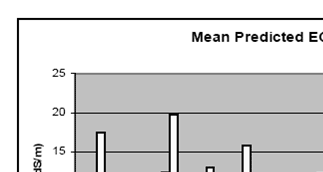
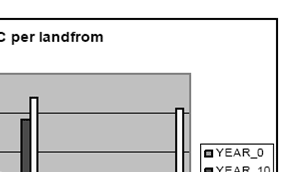
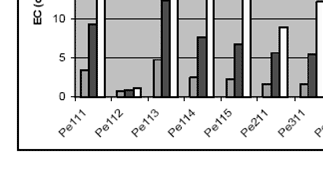
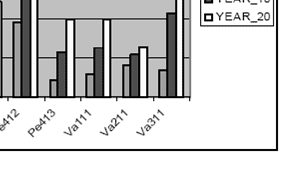
| The root-zone refers to the first two upper soil depth (0-30 and 30 -60cm) of which the average values have been used for input as these layers were measured separately. The results of the predicted root-zone salinity (EC_dS/m) are given in table 1. with the trend showing an increase in salinity from the first year through to the twentieth year. However, some of the landform units show some kind of decrease in the third year (notably Pe111, Va211 & Va311) but finally increased for the tenth and twentieth year. In general the model projects an increase in soil salinity for all the land forms provided that the current land use practices are maintained. Graphical presentation of these results based on relief units is given in figure. |
| GP |
YEAR_0 |
YEAR_3 |
YEAR_10 |
YEAR_20 |
| Pe111 |
3.50 |
3.09 |
9.24 |
17.55 |
| Pe112 |
0.78 |
0.72 |
0.92 |
1.23 |
| Pe113 |
4.77 |
7.65 |
12.37 |
19.73 |
| Pe114 |
2.52 |
3.78 |
7.60 |
13.05 |
| Pe115 |
2.3 |
2.85 |
6.77 |
15.73 |
| Pe211 |
1.6 |
2.63 |
5.64 |
8.95 |
| Pe311 |
1.61 |
2.73 |
5.43 |
12.20 |
| Pe412 |
9.6 |
11.24 |
19.15 |
22.00 |
| Pe413 |
2.12 |
2.84 |
5.74 |
9.85 |
| Va111 |
2.96 |
4.22 |
6.33 |
9.90 |
| Va211 |
3.98 |
4.28 |
5.43 |
6.37 |
| Va311 |
3.50 |
3.87 |
10.64 |
20.56 |
|
|
| Figure 1 : Average predicted root-zone salinity (EC-dS/m)/landform |
|
| Soil Salinity in the Transition zone |
| These results of the predicted salinity in the transition zone are given in tablend figure which basically show a different trend from the root-zone salinity. The EC values predicted by the model for this zone tend to either slightly decrease or remain almost the same for the entire period. In general there is no significantly noticeable change in the salinity in this zone except for only one landform (Va311) where it has increased from an initial value of 4.5 dS/m at the beginning to around 7.5 dS/m at the end of the second season of the twentieth year. The non-changing or slightly decreasing situation in the transition layer can be attributed to mobilization of salts from this zone and aquifer through capillary rise effects to the root-zone. Consequently salts tend to be removed from here and accumulate in the root-zone hence increase in the latter zone but no noticeable changes in the zone below it. |
| GP |
YEAR_0 |
YEAR_3 |
YEAR_10 |
YEAR_20 |
| Pe111 |
0.47 |
0.46 |
0.47 |
0.36 |
| Pe112 |
0.83 |
0.82 |
0.78 |
0.69 |
| Pe113 |
0.59 |
0.59 |
0.57 |
0.52 |
| Pe114 |
0.09 |
0.05 |
0.04 |
0.04 |
| Pe115 |
2.35 |
2.34 |
2.19 |
2.60 |
| Pe211 |
2.52 |
2.36 |
2.18 |
2.08 |
| Pe311 |
1.77 |
1.74 |
1.39 |
1.19 |
| Pe412 |
0.30 |
0.31 |
0.30 |
0.28 |
| Pe413 |
2.74 |
2.80 |
2.78 |
2.88 |
| Pe511 |
0.65 |
0.63 |
0.75 |
1.01 |
| Va111 |
2.64 |
3.65 |
3.72 |
4.12 |
| Va211 |
3.53 |
3.52 |
3.24 |
2.64 |
| Va311 |
4.50 |
4.48 |
4.80 |
7.53 |
|
|
| Figure 2 : Average predicted salinity in the transition zone (EC-dS/m)/landform |
|
| Salinity in the Aquifer |
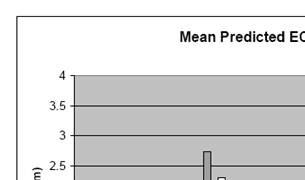
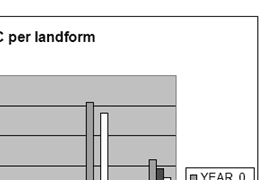
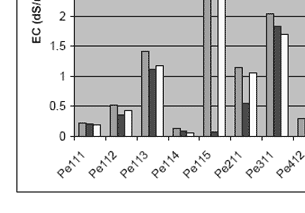
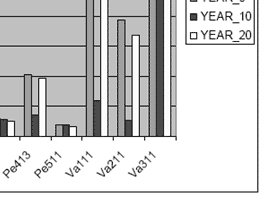
These results for the predicted salt content changes over time in the aquifer zone are given in table and figure . The behaviour is quite similar to the transition zone whereby there is no really serious change in the salt content, i.e. the salinity tends to remain almost the same throughout the simulated 20 year period. This observed stability of the soil water salinity concentration in the aquifer (Cqf) suggests a lack salt leaching from root and transition zones into the aquifer. Another factor that can be highlighted is the horizontally incoming groundwater that was not taken into consideration due to lack data. Thus only the horizontally outgoing water was considered which was estimated through the calibration process of the natural drainage. The suggested procedure for the calibration of the natural drainage (Gn) is to set the incoming groundwater (Gi) as zero[30, 31, 46, 49]. Then arbitrary changes for outgoing ground water (Go) are made to get the best possible the value that better predicts the observed water table. In this the total natural drainage (Gn = Go – Gi) is equal to the horizontally outgoing groundwater.
|
| GP |
YEAR_0 |
YEAR_3 |
YEAR_10 |
YEAR_20 |
| Pe111 |
0.23 |
0.23 |
0.21 |
0.20 |
| Pe112 |
0.52 |
0.38 |
0.35 |
0.43 |
| Pe113 |
1.42 |
1.19 |
1.11 |
1.18 |
| Pe114 |
0.13 |
0.10 |
0.09 |
0.06 |
| Pe115 |
2.73 |
0.08 |
0.08 |
2.31 |
| Pe211 |
1.15 |
0.58 |
0.55 |
1.05 |
| Pe311 |
2.04 |
1.96 |
1.83 |
1.70 |
| Pe412 |
0.30 |
0.30 |
0.28 |
0.25 |
| Pe413 |
1.02 |
0.37 |
0.36 |
0.96 |
| Pe511 |
0.20 |
0.20 |
0.19 |
0.17 |
| Va111 |
3.56 |
0.61 |
0.59 |
0.37 |
| Va211 |
1.93 |
0.29 |
0.27 |
1.68 |
| Va311 |
2.60 |
2.57 |
2.45 |
2.31 |
|
|
| Figure 3 : Average predicted salinity in the aquifer (dS/m)/landform |
|